

Some wildlife moments don’t require a forest, a long trek, or expensive gear. Sometimes, they unfold right outside your home, quietly, unexpectedly, and beautifully.
This is exactly how I encountered the White Cheeked Barbet.
It was a calm morning, and like any other day, I happened to glance out from my balcony. Our banana tree stood there, heavy with fruit, swaying gently. At first, nothing seemed unusual. But then I noticed movement, quick, deliberate, and surprisingly confident.
There it was.
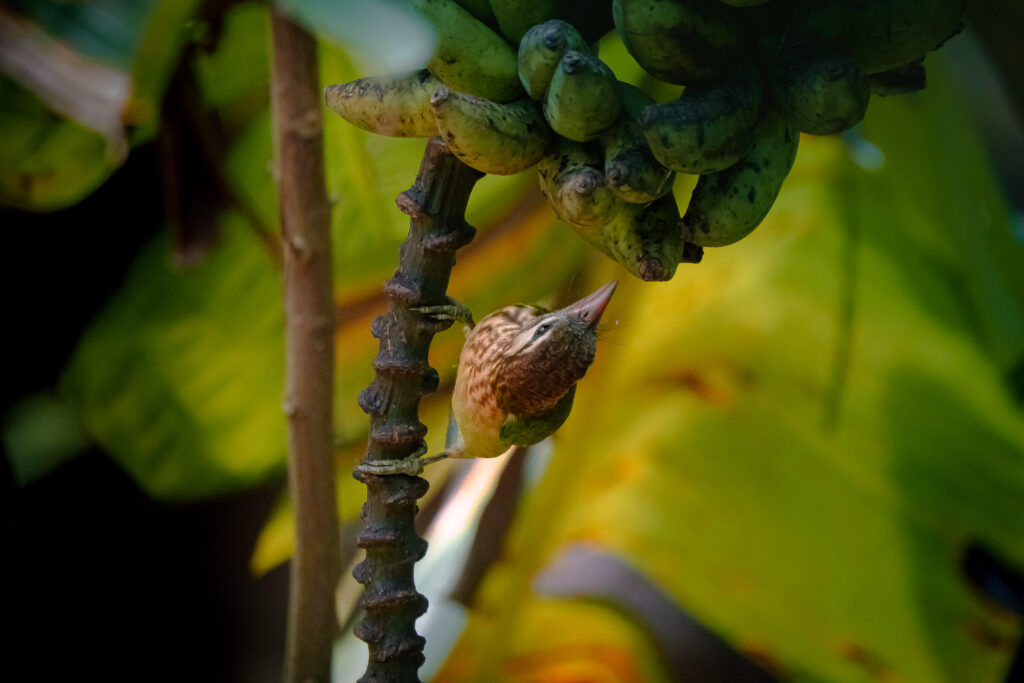
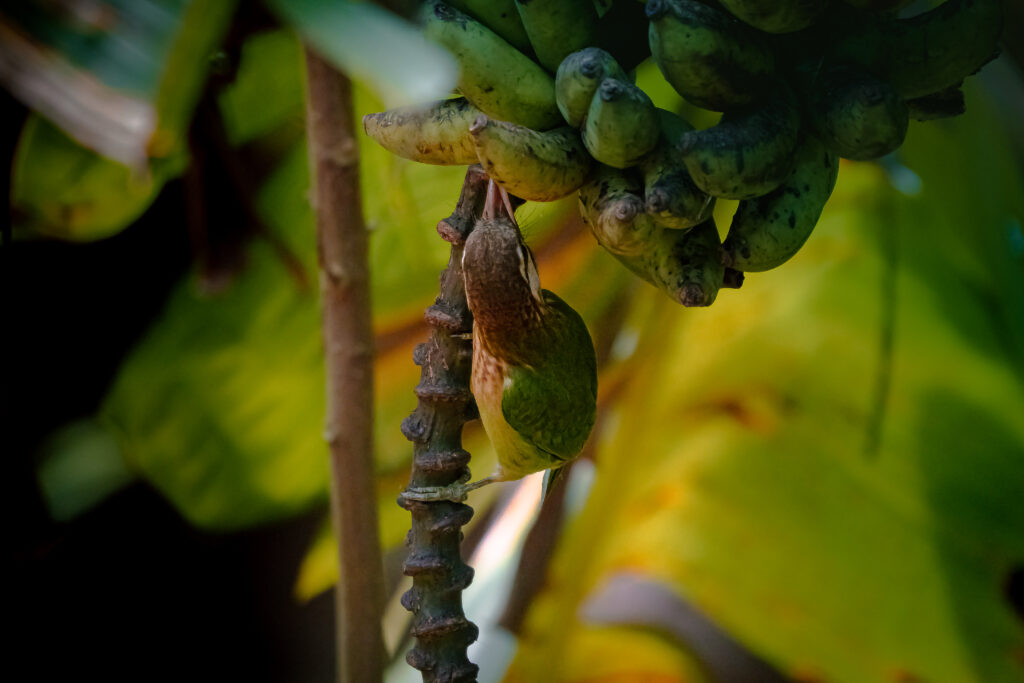
A small, vibrant bird perched comfortably on the banana bunch, completely unbothered by its surroundings. The White Cheeked Barbet had arrived, not just to visit, but clearly with a purpose.
The Banana Thief
What struck me immediately was how fearless and focused the bird was. It wasn’t just pecking randomly, it was strategically eating. The barbet carefully positioned itself, gripping the stem with precision, and began carving into the bananas with its strong beak.
It almost felt like watching a professional at work.
The way it tilted its head, assessed the fruit, and took calculated bites showed just how adapted these birds are to feeding on fruits. There was no rush, no panic, just calm confidence. As if the tree belonged to it.
And honestly, in that moment, it did.
A Closer Look
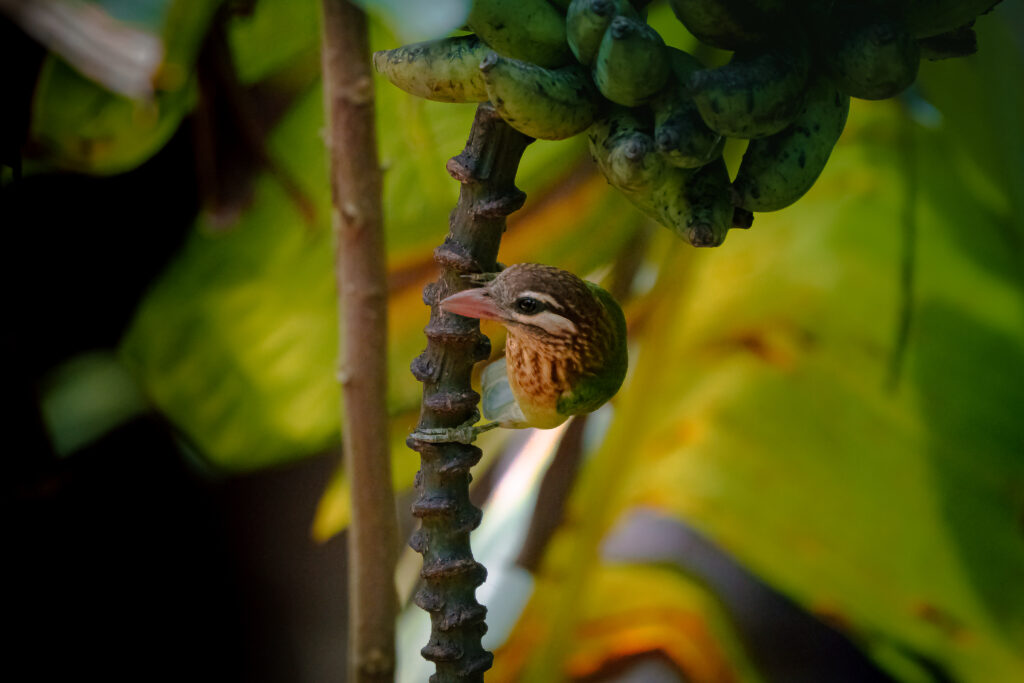
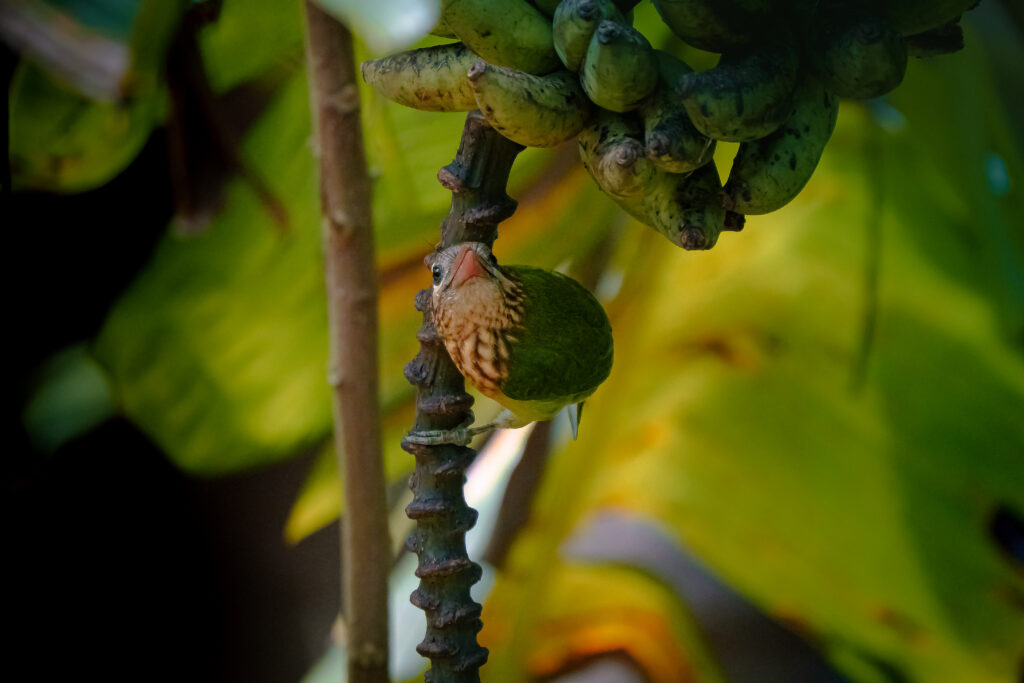
Seeing the White Cheeked Barbet this close was a visual treat. Its green body blended perfectly with the leaves, making it almost invisible at first glance. But the details stood out beautifully once you focused.
The subtle white streak on its cheek
The warm brown streaking across its throat and chest
That sturdy, slightly curved beak, perfect for fruit and bark
And the alert, observant eye that missed nothing
It’s fascinating how nature designs such perfect camouflage, yet allows just enough uniqueness to make the bird stand out.
Editing Process Bringing the Moment to Life Lightroom Mobile
Capturing the shot was only half the story. To truly bring out the mood and details, I edited these images using Lightroom Mobile, focusing on keeping the image natural while enhancing the subject.
Here’s exactly how I approached the edit.
1. Basic Adjustments
Exposure slightly increased to lift the overall brightness without blowing highlights
Contrast added moderately to create separation between the bird and background
Highlights reduced to retain detail in the bananas
Shadows increased to recover details in the bird’s body
Whites and Blacks fine tuned to give depth and punch
2. Color Tuning
Temperature slightly warmed to enhance the natural greens and yellows
Vibrance increased to make the bird pop without oversaturating
Saturation kept minimal to maintain realism
3. HSL Color Mix
Green slightly reduced in saturation and hue adjusted to avoid overly harsh greens
Yellow tweaked to make the bananas look rich but not distracting
Orange boosted slightly to enhance the texture on the bird’s chest
4. Detail and Texture
Texture increased to bring out feather details
Clarity added subtly for midtone contrast
Sharpening applied carefully, mainly focused on the bird
5. Selective Adjustments
Used masking to brighten the bird slightly
Added extra sharpness and clarity to the eye and beak
Kept the background softer to maintain subject focus
6. Noise Reduction
Luminance noise reduction applied moderately
Color noise reduction slightly increased to clean up grain
7. Final Touch
Added a very subtle vignette to draw attention toward the subject
The goal wasn’t to over edit, but to recreate how the moment felt in real life, calm, vibrant, and intimate.
More Than Just a Bird
What made this experience special wasn’t just the sighting, it was the realization.
We often think wildlife photography or birdwatching requires traveling to remote forests or wildlife sanctuaries. But moments like this remind us that nature is always around us, quietly existing alongside our daily lives.
This barbet didn’t see my home as separate from nature, it saw it as part of its ecosystem.
And maybe that’s the shift we need, to observe more, to slow down, and to notice.